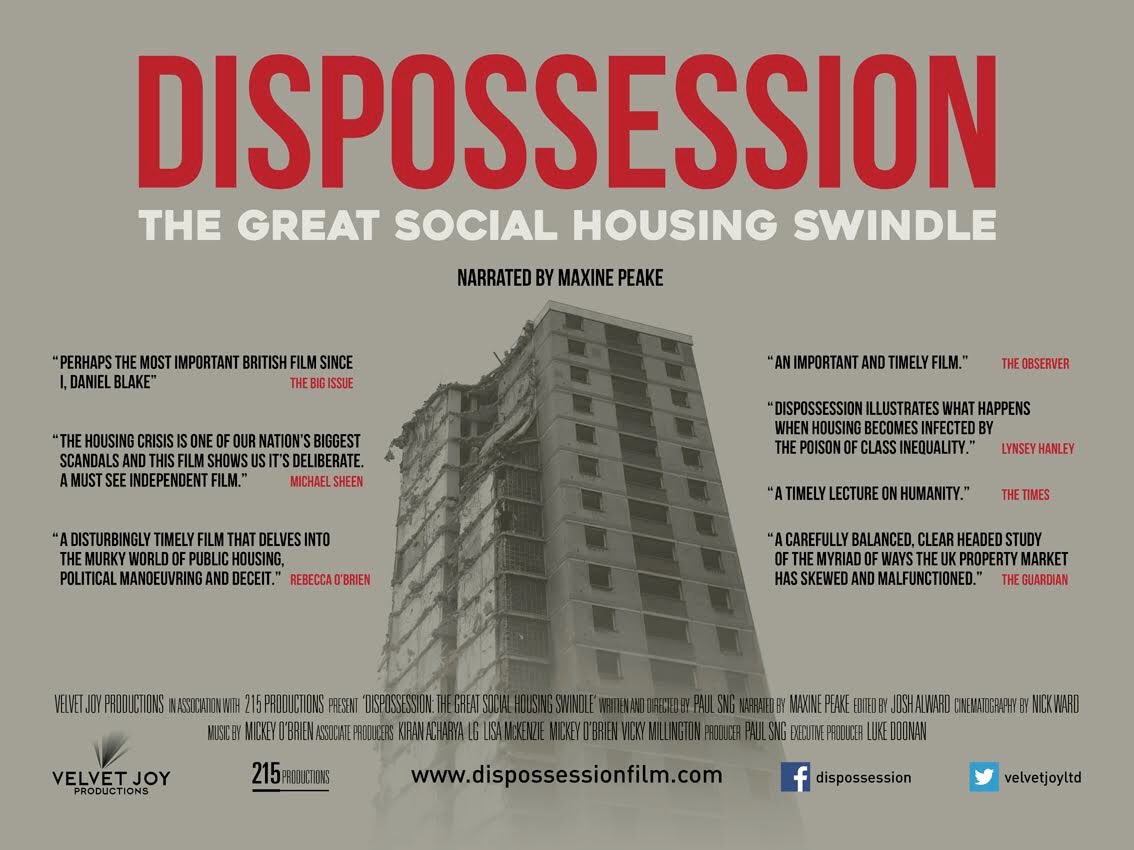
Dispossession
noun: dispossession; plural noun: dispossessions
-
the action of depriving someone of land, property, or other possessions.
“the global impact of poverty and dispossession”
For the last 30 years social housing in the UK has been in sharp decline – what was once a provision of public duty of care is now portrayed by the popular media and poverty porn TV as a benefit system cheat for the people who do not wish to work and a permanent refuge for illegal immigrants.
But in its 60s heyday, council housing provided safe, affordable and secure accommodation for almost 40% of the British population and marked a continued progressive effort to protect families from unscrupulous landlords and to do away with dirty, dilapidated and overcrowded terrace houses – how times have changed – or not.
Dispossession gets to the heart of the issue – the current figure of the British population living in council or social housing is now around 8%. Many of these people will be on some form of benefits, such as universal credit or disability living allowances. The rest of the population have slowly been forced back in time and squeezed into the private rental sector; once again dodgy landlords rent out dodgy flats and houses at eye-watering rates, and in major cities such as London, Glasgow or Manchester – rent often occupies the majority of an individual’s monthly income.
The problem is underlined by the fact that even for those most in need, the most vulnerable in our society, there is a significant shortage of social housing. This means that many people are forced to take whatever housing is offered to them, no matter the standard; leading to the destruction of communities and the displacement of individuals from their social networks and the areas they have lived all or most of their life. The alterative is bleak – they can opt to register themselves as homeless, thus adding to the problem.
The documentary makes it clear that social housing has suffered a steady series of blows over the years. Beginning with the introduction of the right-to-buy policy, that proved so popular it helped to secure the general election for Margaret Thatcher, but drastically depleted UK social housing stock, and entrenched a dangerous precedent that prioritised the individual and their interests, over others living in the same society as them.
The financial squeeze upon the poorest in the UK is clear – and this would have been good to explore in the film – with so many working poor struggling to make ends meet, especially in the hyper-inflation of London. As one of the talking heads in the film points out – “We can’t all be at that higher level of income” – therefore, in order to live in a society of fair and equiatable standards of living, people on minimum wage, let alone the Living Wage, should have access to affordable housing that meets their income.
A strong roster of talking heads are present, including the journalist, Dawn Foster, who has been one of the most vocal and steadfast commentators on the Grenfell Tower fire. There is a lack of balance in terms of varied opinion on the situation, but the film’s mandate is clear and many of the developers and housing associations criticised in the documentary refused to comment.
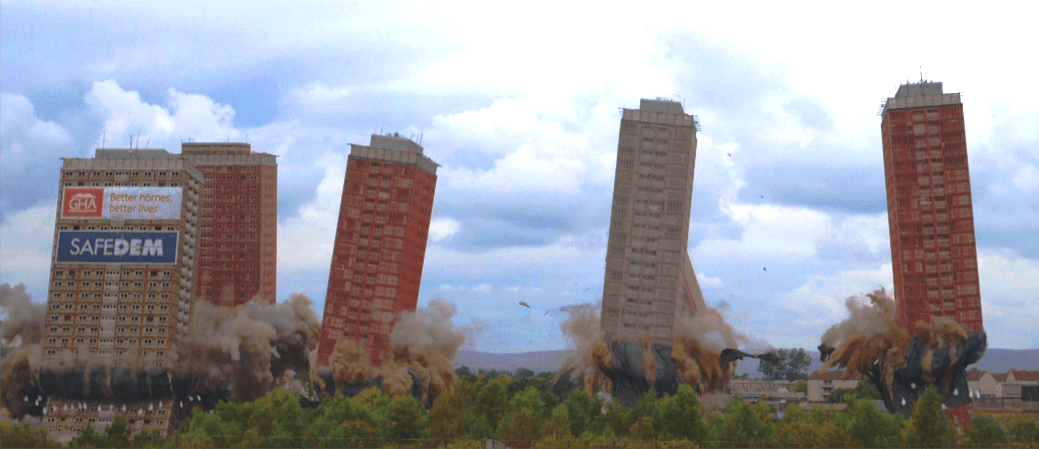
The “great swindle” in the sub-title of Dispossession refers to the gradual erosion of social housing in areas that have since become desireable as inner-city central space becomes less readily available and drastically increases in price, what is popularly referred to as “social cleansing”, by which rises in rent force poorer residents out of an area they could previously afford.
In this situation, the social housing stock currently occupying areas of prime real estate is very callously being sold-off by local authorities, who are grossly underpaid on the deal, and with few guaranteed social housing quotas secured because private buyers don’t want to live next to poor people. This social housing stock is rarely replaced, (there are broad overarching government restrictions on councils building new housing stock as part of continued austerity measures) – the person who benefits is the developer, their investors and the new tenants. Forget gentrification or claims of artwashing – this your home and the land it sits on being sold-out from beneath you.
Dispossession is a cry against the neo-liberal consensus, a form of social contract to which most people have never subscribed to, but it has established multiple forms of privatisation, sheer individualism, often at the expense of others, as the mandate with which to seize and exploit social housing, former public property, through public bodies, funded by public taxation. The film also points out thatmany of these projects are managed in partnership with semi-private housing associations, minor QUANGOs, often leading to stark conflicts of interest. There is a strong undercurrent in the documentary that much like the systematic sabotage of the NHS by the current government, individual estates and the social housing system itself is being left to fall apart, and because it only directly affects such a minority of the population, the poorest in our society, it seems few will notice its passing – Dispossession is a bold attempt to wake us up to this silent emergency.
 Disappear Here