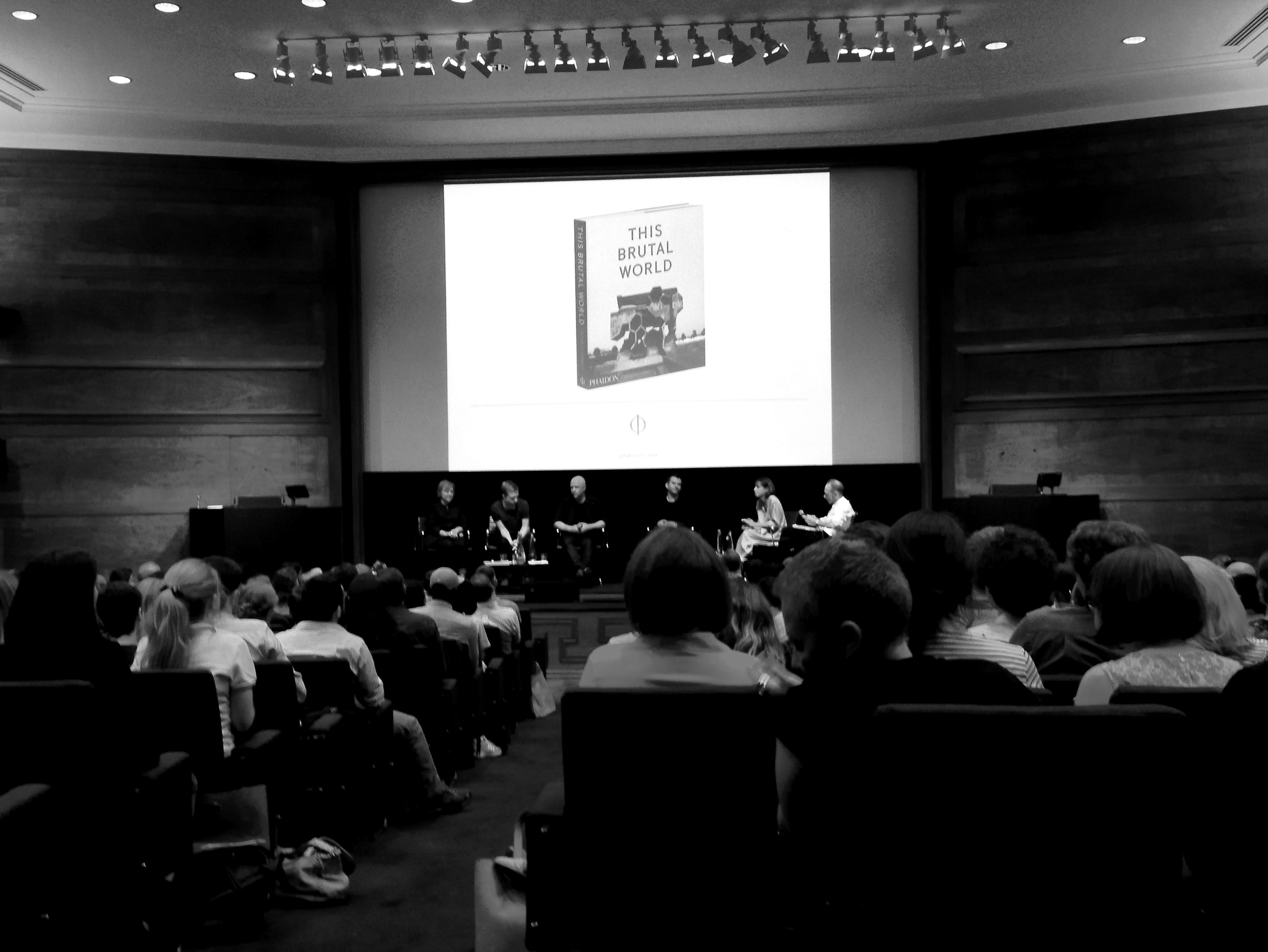
Panel discussion chaired by Virginia McLeod (Commissioning Editor at Phaidon) with Peter Chadwick (author This Brutal World), Jane Hall (Assemble), Tom Cordell (director, Utopia London) and Douglas Murphy (author, Last Futures: Nature, Technology and the End of Architecture) – Tuesday, 7/6/2016 at RIBA, London.
14.00
Normal
0
false
false
false
EN-GB
X-NONE
X-NONE
/* Style Definitions */
table.MsoNormalTable
{mso-style-name:”Table Normal”;
mso-tstyle-rowband-size:0;
mso-tstyle-colband-size:0;
mso-style-noshow:yes;
mso-style-priority:99;
mso-style-parent:””;
mso-padding-alt:0cm 5.4pt 0cm 5.4pt;
mso-para-margin-top:0cm;
mso-para-margin-right:0cm;
mso-para-margin-bottom:10.0pt;
mso-para-margin-left:0cm;
line-height:115%;
mso-pagination:widow-orphan;
font-size:11.0pt;
font-family:”Calibri”,”sans-serif”;
mso-ascii-font-family:Calibri;
mso-ascii-theme-font:minor-latin;
mso-hansi-font-family:Calibri;
mso-hansi-theme-font:minor-latin;
mso-fareast-language:EN-US;}
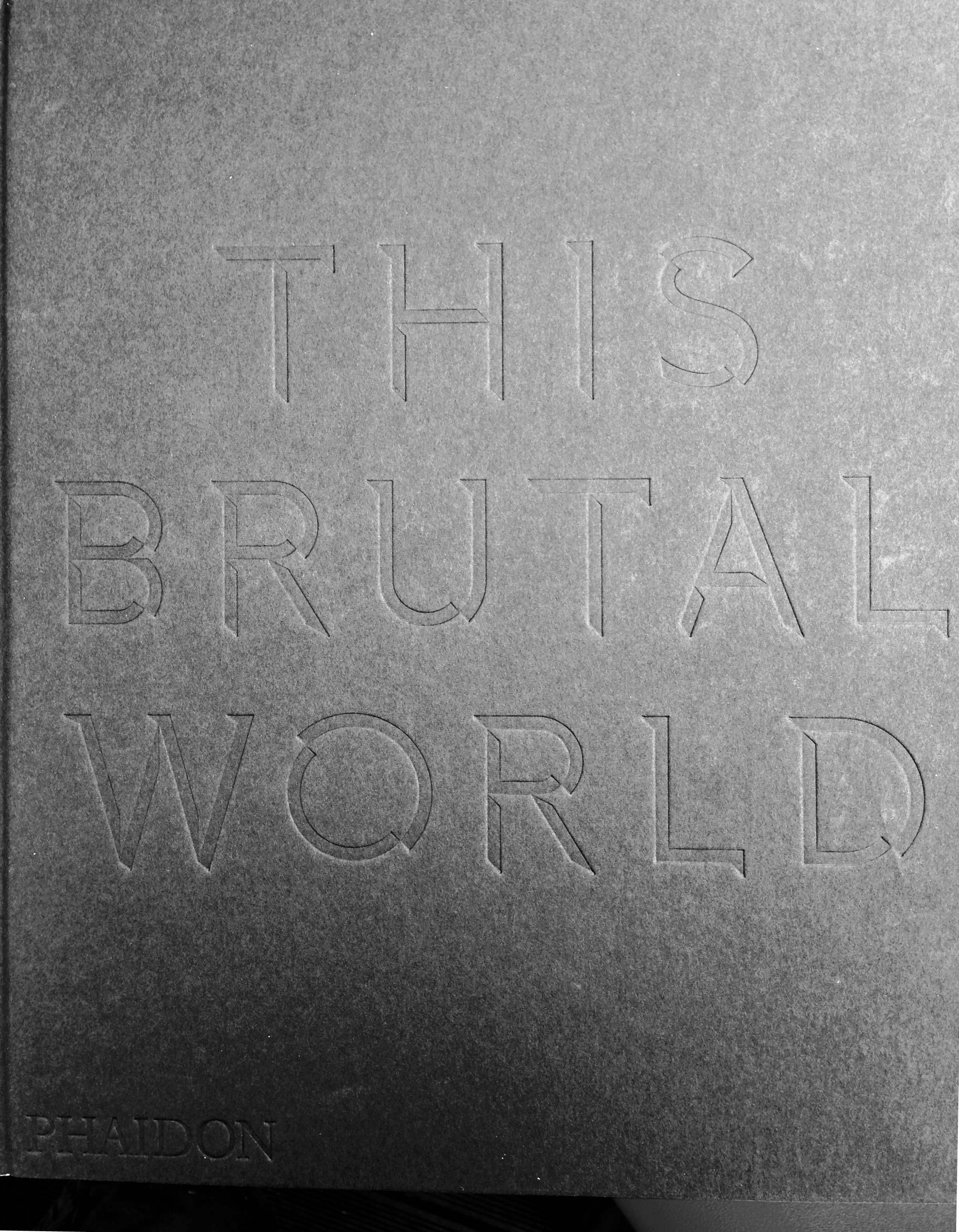
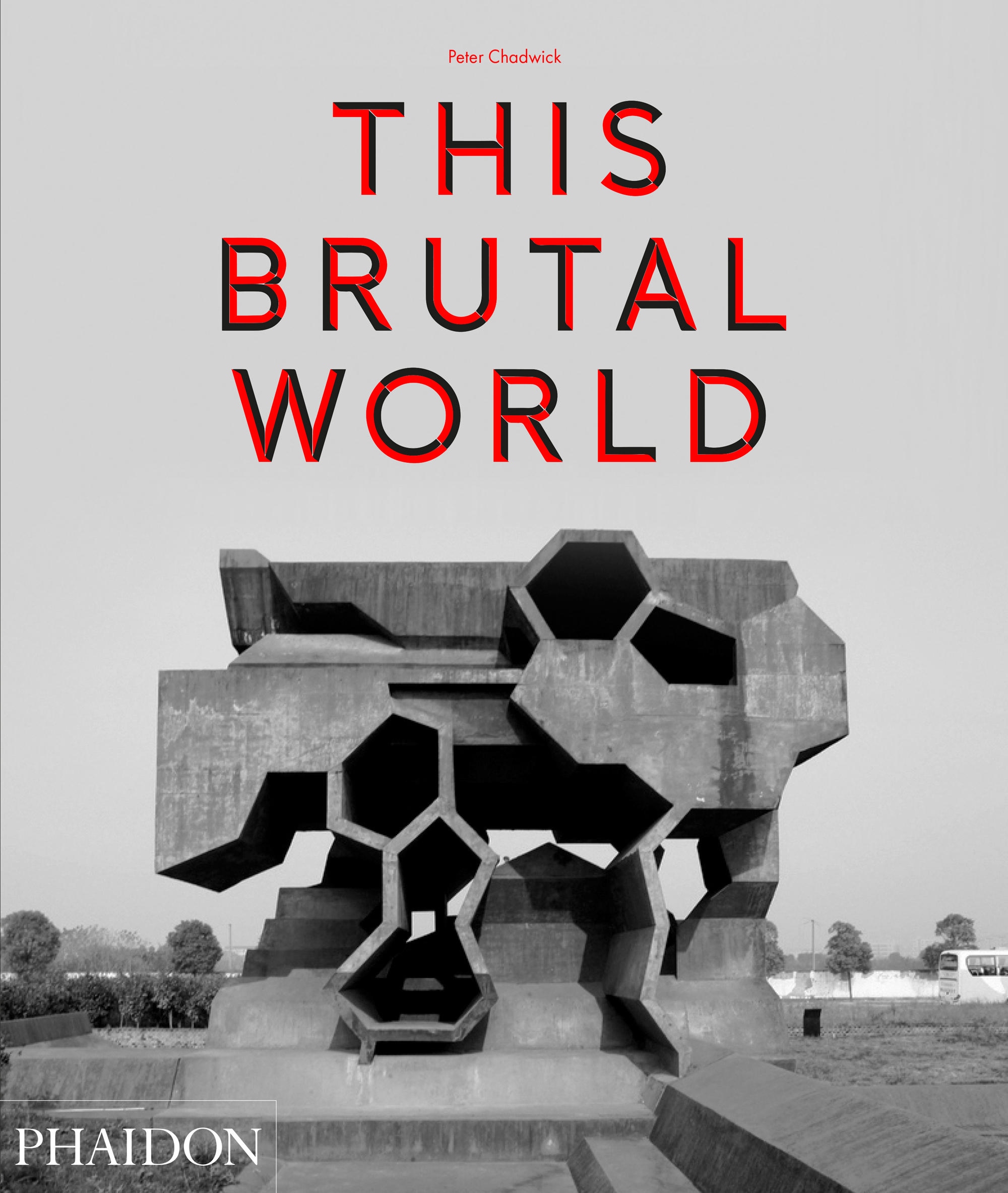
Brutalism is a much-misunderstood beast, it inspires hate/love/fear wherever it makes its footprint felt – but with a recent resurgence of interest in the slouching behemoths, from popular press, Twitter feeds and Brutalist-spotting tourism maps – crystallising in the launch of a new photography book, This Brutal World – it seems a revolutionary reappraisal is in order. I went along to an event at Royal Institute of British Architects (RIBA) to hear a varied, insightful but united panel talk about a shared appreciation of Brutalism, and challenges and chimera of architectural hindsight.
The event begins with an opening salvo from the publisher, Phaidon’s Commissioning Editor, Virginia McLeod. She explains how she and the book’s author/editor, Peter Chadwick, worked closely together, fashioning a working manifesto for the selection of images in a book that has made substantial effort to encompass and fairly represent a worldwide architectural style that spans nations and with no singular uniform or defining set of features. They looked for the monolithic, not just concrete, brave and bold structures that seemed to instantiate but also to stretch the popular and common notions of Brutalism, a greatest hits but also with a few lost b-sides thrown in.
Peter Chadwick stated that This Brutal World, is as much a labour of love as a nostalgic déjà vu of Brutalist icons he has followed, one way or another, his whole life. Indeed, the evening’s discussion slightly chases its tail – Why Brutalism? Why still? Why now? And never quite catches it – although there is overall consensus that Brutalism continues to be a force and perhaps that, with hindsight, it’s time has truly come?
Peter said that he hoped the book will encourage a re-appraisal of Brutalism, generally. Indeed, the fact that Brutalism has kept going, in various forms, reflects the idea of nostalgia for the future referred to in reference to the Krautrock “movement” of 1970s Germany (and divided Berlin) and a number of 70s films (such as A Clockwork Orange and Get Carter) all looking forward beyond the World War II-era only to fall under the shadow of Communism.

Douglas Murphy talked about the post-WWII legacy of Modernism optimism feeding directly into Brutalist idealism that has both outstripped and outlived its history and sometime negative associations of crime-ridden tower-blocks and rough estates(more on that later). Moving on from the 50s where British people were said to have: “never had it so good” – all this alongside continued rationing and general cultural malaise and conformity. Brutalism seemed to indemnify a shift where architects became more ambitious but also adopted the well-meaning, though not always so well thought-out, ideal of popular consensus.
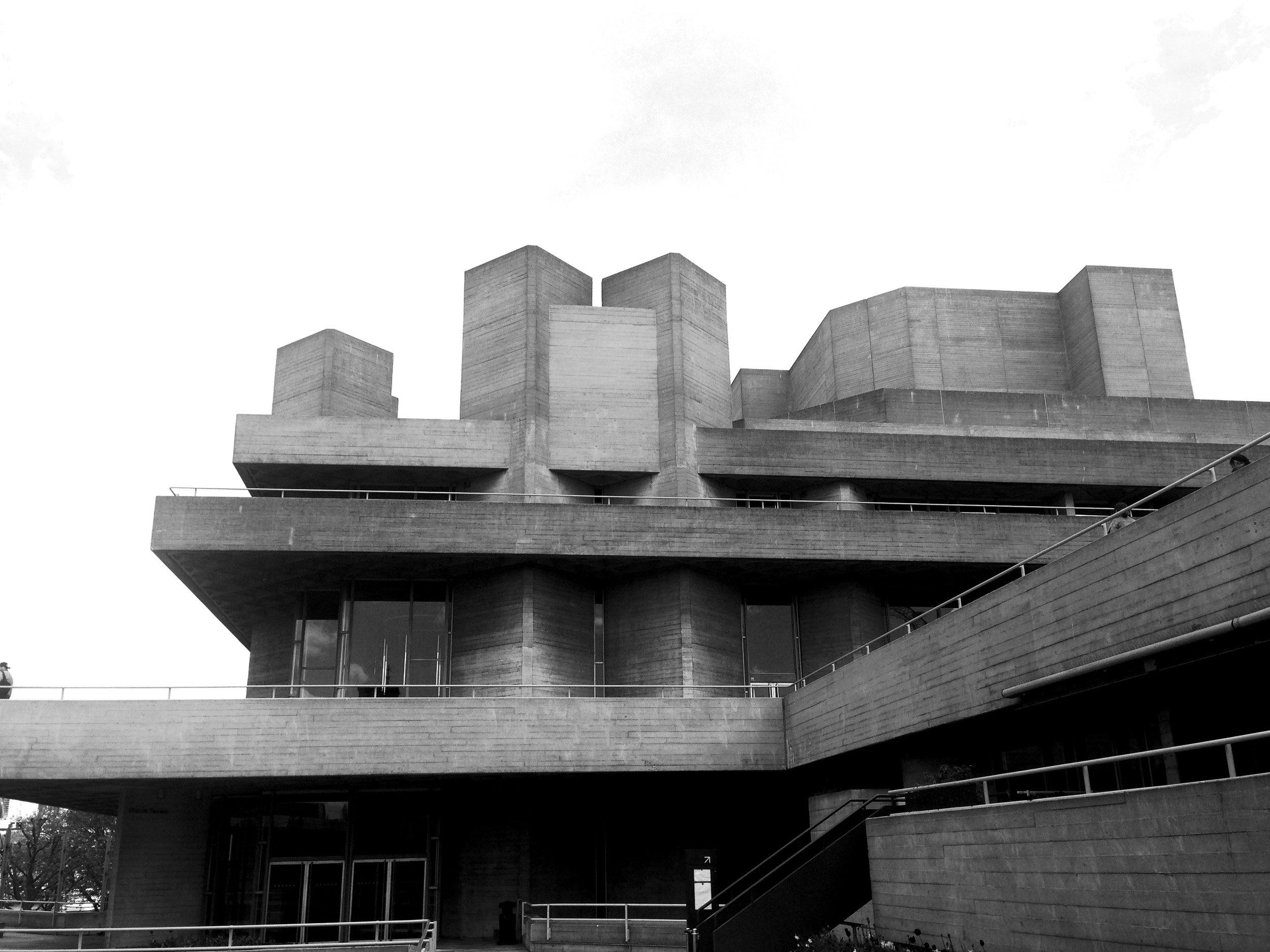
Douglas went further, pointing out how there was a perceptible class element in the later 70s/80s stages of this project, where successive Conservative governments exploited what was in many ways, an earnest and well-meaning practice to become a way of pushing out undesirable, problematic groups of society (as they saw it) into what became un-supported and ignored “sink-estates” – Modernist/Brutalist housing areas and high-rises continued to be built to move people away from terrace slums and to rebuild in bombed-out areas (such as the City of London’s Barbican) with a spirit of desired utopia by way of planned communities, that both did, and didn’t, work.
Nowhere is this form of cultural cleansing more noticeable than the mass high-rises and satellite towns of Glasgow, such as East Kilbride or the Red Road estate, disconnected from the centre and in some respects left to rot, that is, to go bad, as drugs and general crime took hold, generating a bad reputation and the “brutal” became real, this is not an isolated case, and is comparable to the ghettoised, satellite estates the banlieue of Paris of ostracised youth, often people of African and Arabic descent or more recent immigrants, victims of post-colonial fallout and continued racism, as portrayed in the film La Haine (The Hate).
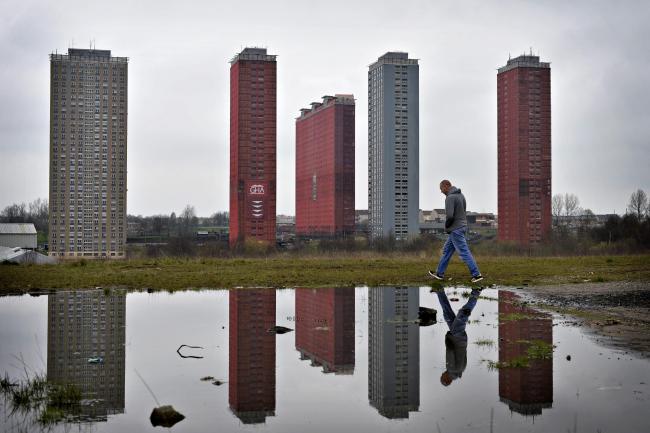
While this might seem less about the buildings of Brutalism, it has impacted their reputation in two ways. The first being the negative attachment of dilapidation, Peter points out how different mixes of concrete age and weather less endearingly than classical lumps of stone, particularly in the wet and cold climates, making the buildings appear old and tired while still quite new, second the impact of the first generation of 60s high-rise towers constructed from flat-pack, pre-fabricated panels; some of the first major experiments in the material, before larger steel reinforcing skeletons were introduced, led to the collapse of some residential towers. In fact, these would be more accurately placed into the Modernist era of design and construction methods, but the attachment stuck, allowing for a confirmatory tut-tutting from Brutalism’s greatest critics as other estates and constructions across the world fell into dis-repair and neglect, and were ultimately demolished. In this regard Brutalism has a jagged legacy, with many “failed” designs, often social housing experiments, compared to its greater number of triumphant and enduring achievements.
There is a question over whether Brutalism is more fondly viewed from a purely aesthetic view; more sculpture, less as Corbusier’s “machines for living” which often leaves Modernism as its poorer, more de-facto functional – and less experimental – cousin. It is difficult to delineate as much of it appears of a type, except for exceptional greyness, there is little to distinguish between the decades, all the buildings included share a likeness. But why shouldn’t buildings verge upon sculpture, could we live among Hapworth’s abstractions and Henry Moore’s open arms, while these are softer, non-brutalist constructs, why shouldn’t the ordinary also be allowed to be fantastic? Critic of modernist and brutalist structures, Owen Hatherley, gives a brilliant quote in the book calling-on the idealistic and open-access brilliance of Brutalism when he argues that it was an invisible movement “…dedicated to the precept that nothing was too good for ordinary people.”
The beauty in brutalism, which I, and clearly many others feel to be quite real, albeit a particular version of that rare quality is also one of the most challenging and deeply negative aspects of Brutalism. The classic question set against brutalist structures from its detractors to its defenders is “would you live in one?”. Erno Goldfinger notoriously quit his Trellick tower penthouse (a building he designed) after a short stay, and aside from the now very desirable and expensive, Barbican in the heart of the City of London, there are not many Brutalist housing estates that have people queueing-up to move in.
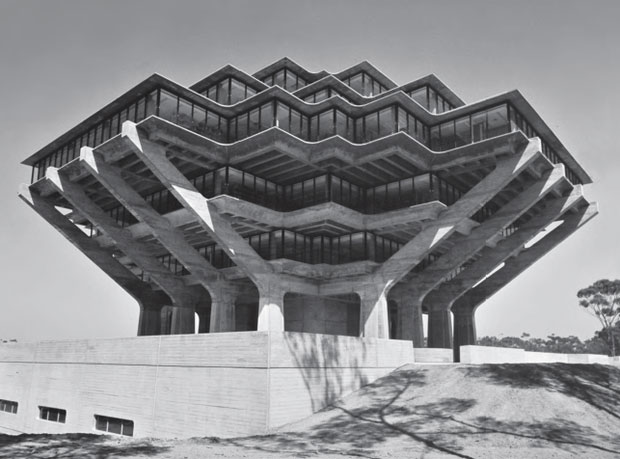
One of the most interesting aspects of the ways in which Brutalism appears to us, most often in photographs or books such as TBW, is that it is as managed a portrayal as almost any other media project. A common and lazy appropriation being the use of brutalist buildings as “urban” settings (which they often are) for portrayals of crime, youth culture and class struggle/difference. In some senses this is true. A great question came from an audience member, himself a resident of a Brutalist estate in Sheffield, regarding the use and abuse of Brutalist spaces as urban playground, iconic settings for dramatisations of “real” life (see White Noise City) but also as positive environments of first times, as well as birthing graffiti and street art, pirate radio, skate culture, encompassing the use abandoned spaces for illegal raves, squatting and co-op living movements, and how gentrification, the decline in social housing and demolition put these spaces and the class of people that created in them under threat of economic migrancy, being moved-out to areas such as outer-London so developers can take over.
Tom Cordell, director of the film, Utopia London, agreed strongly, pointing out how the increase in surveillance culture has limited and restricted people living in heavily urban areas, so while being protected from crime, they are also forced to live their lives under close watch. This alongside the often “defensive” character of many Brutalist structures and estates, hulking bulwarks, slit windows and chunky balconies which Jonathan Meades argued had evolved directly from World War II bunkers (BBB) can make Brutalism appear stand-offish and coolly insular. Ulitmately, the association is prejudicial and narrow-minded, casting negative assumptions on the people who live within Brutalist sites because of a dislike or preconception about the buildings.
The aestheticization of what we might call “authentic” spaces of Brutalism as objects of curiousity under detached contemplation, ripe for psychogeographers and urbex adventurers attempting to ape popular wanderers like Iain Sinclair and Will Self, sometimes manifest as ruin fetish (see Julien Temple’s – Requiem for Detroit) we praise the rough and edgy environments then return to comfortable, suburban Victorian terraces. This isn’t a crime as such, but it represents a division between some of the more artistic examples of Brutalism and the residential spaces where some people are simply “put” – and subsequently wish to leave.
But even in the publishing aspect of Brutalism, it was noted by many of the panel that images are often sharply cropped (to occlude nearby buildings from a variety of other eras and building traditions – Victorian terraces next to 30-storey high-rises) presented without the people who live and work in that community, but also in stark black and white. The irony of this being that Brutalism can appear intensely alien and alienating, purely by virtue of being allowed to stand deserted and alone.
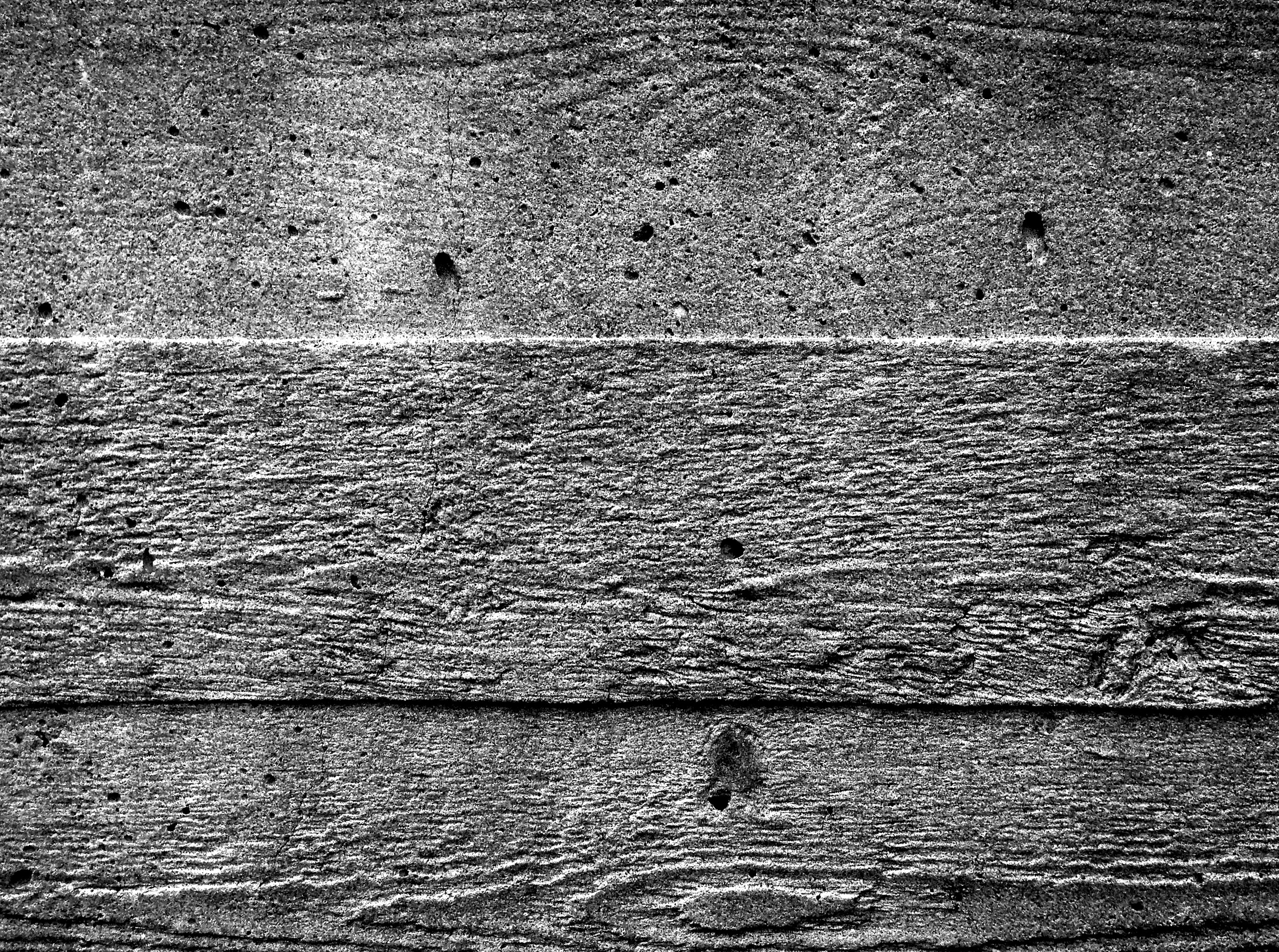
There are a few things to un-pick here: the removal of places from surrounding context, especially people, attaches a fair bit of dehumanising instinct to the Brutalist project, they appear barren and bereft, also, another panel member, Douglas Murphy (author of Zero Books’ Architecture of Failure) framed the conversation in perspectives of time and style. Many of the most iconic brutalist images of buildings constructed in its 60s/70s peak, are of that culture of photography, much of the camera technology would still be black and white, and this is reflected also as a matter of taste. Peter referred back to this in mentioning that he preferred the B&W aesthetic, and that many of the best images available are shot that way, so this became another casting editorial decision that sets a tone for the book – I love black and white – while my girlfriend pointed out to me, that not unlike try-hard photography students, the colour choice allows greater depth of contrast and further clarity of the shapes and planes of the buildings, indemnifying them further as sculptural structures – it also lends them a timeless quality.
Several questions from the audience asked about the lack of inclusion in the book of more sites from Africa, the Middle East (beyond Israel) and South America. Peter Chadwick was able to comment that there is a significant lack of quality photography for these regions and while there were many interesting site not all of them were sufficiently Brutalist to fit within the project’s criteria. Jane Hall of Turner Prize-winning architectural collective, Assemble, said that Brutalism is alive and kicking in many South American countries, with a distinct style of involving labourers more intimately and giving them a freer rein in the final look of the building, such as leaving-in handprints and other marks of labour to add a human aspect to the finished building.
Another audience member asked about precursors of Brutalism leaving the panel quite stumped to find a comparative mode of design, the only thing I could think of might be the ancient monolithic; Egyptian and Aztec pyramids, if only for their hard angles and imposing composition, but this fails to account for the fluidity of concrete as perhapsthe most flexible and therefore creatively liberating of construction materials. Although some of the buildings in the book are from the early turn of the (last) century.
Overall, the event was a great example of how Brutalism engages and challenges people. It remains architecture that demands your attention and in its singular variety shows an evolution that is still ongoing – perhaps the fact that it is still a living, breathing movement, that echoes beyond its time, is why we still love it – This Brutal World is a brilliant example of this.
 Disappear Here
Leave a comment